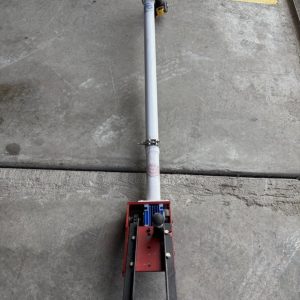
The Aircraft Electric Tow Bar – Mini Max Style provides convenient powered assistance for pilots, aircraft technicians, private owners, and aviation businesses that need dependable movement inside or around a hangar. Using an Aircraft Electric Tow Bar can simplify hangar positioning, reduce manual handling demands, and provide more predictable movement on suitable ground surfaces.
A used Electric Tow Bar for Aircraft can provide strong practical value when its drive system, frame, connections, controls, and included accessories remain in good condition. Before purchasing a Used Electric Aircraft Tow Bar, operators should confirm that the unit functions properly and can attach securely to the intended aircraft.
A Mini Max Aircraft Tow Bar can provide a useful balance between manual towing equipment and a larger dedicated aircraft tug. Purchasing an Aircraft Tow Bar with Drill and Aircraft Tow Bar with Charger can reduce setup delays and help the operator maintain a ready-to-use ground-handling system.
A Portable Aircraft Tow Bar allows operators to maintain powered aircraft-moving capability without permanently dedicating substantial floor space to ground equipment. This Powered Aircraft Tow Bar can also serve as an Electric Airplane Tow Bar for compatible light aircraft when the connection method, aircraft weight, nose-wheel arrangement, surface, and operating conditions are suitable.
Within the category of Aircraft Ground Handling Equipment, a compact electric tow bar can provide useful movement capability without the complexity of larger powered machinery. The unit can function as an Aircraft Hangar Tow Bar, Aircraft Moving Equipment, Electric Aircraft Mover, Aircraft Mobility Equipment, or Light Aircraft Tow Bar when verified for the intended application.
Understanding the Aircraft Electric Tow Bar – Mini Max Style
The Aircraft Electric Tow Bar – Mini Max Style provides a convenient middle ground between fully manual movement and investment in a larger dedicated tug. The exact performance will depend on aircraft weight, tire condition, ramp slope, surface material, available traction, tow-point design, and the condition of the powered components.
A Mini Max-style unit may help operators manage tight hangar spaces where a larger tug would be difficult to store, turn, or operate. Controlled speed, clear communication, obstacle awareness, and appropriate assistance remain important even when using compact powered equipment.
Electric Tow Bar for Aircraft Benefits
An Electric Tow Bar for Aircraft may support more efficient ground handling by reducing the time and effort involved in routine positioning. The equipment can be useful for private aircraft ownership, maintenance inspections, washing, fueling preparation, hangar organization, and temporary repositioning.
Using powered towing equipment may reduce engine starts that are performed only to move an airplane a short distance. Safe towing requires confirming that the aircraft is ready to move and that no equipment, personnel, or obstacles interfere with the planned path.
Used Electric Aircraft Tow Bar Purchase Guide
The available used unit may be attractive to cost-conscious aircraft owners who want compact powered equipment in excellent operating condition. According to the available description, the tow bar previously moved a Navion and was removed from regular use only because the owner purchased a larger tug.
Buyers should request clear photographs of the frame, wheels, attachment assembly, powered drive, drill, charger, wiring, fasteners, handles, and areas showing wear. The buyer may request a demonstration using an appropriate load so the tow bar is not evaluated only while running freely without resistance.
Mini Max Aircraft Tow Bar Operation
A Mini Max Aircraft Tow Bar is generally selected by operators who want powered movement in a compact configuration that does not occupy the floor space of a conventional aircraft tug. The close-control configuration can help users align the aircraft carefully with hangar doors, parking marks, maintenance positions, or storage areas.
A qualified person should review the attachment method and operating geometry before the tow bar is used on an unfamiliar airplane. Correct attachment selection is one of the most important factors in achieving reliable, controlled, and damage-free aircraft movement.
Aircraft Tow Bar with Drill Maintenance
An Aircraft Tow Bar with Drill uses a compatible powered drill to drive the movement mechanism, providing a convenient source of rotational power without a separate built-in propulsion engine. The drill should have the correct torque, speed range, battery condition, chuck arrangement, and compatibility with the tow-bar drive mechanism.
Smooth drill input supports controlled starts, predictable stopping, improved traction, and reduced stress on the towing connection. After use, the drill and tow-bar drive should be inspected for heat, wear, looseness, contamination, damage, or abnormal operation.
Maintaining an Aircraft Tow Bar with Charger
The included charger adds practical value because the tow bar depends on reliable battery power for controlled aircraft movement. Buyers should confirm that the charger operates correctly, matches the battery type, has an undamaged cable, and is suitable for the available electrical supply.
Regular charging and proper storage can help preserve battery health, particularly when the tow bar is used only occasionally. Before important aircraft movements, the operator should confirm battery charge rather than discovering insufficient power after the aircraft has been partially repositioned.
Using a Portable Aircraft Tow Bar
Portability is useful for mobile maintenance providers, shared hangar operators, aircraft dealers, flying clubs, and private owners with limited permanent storage. Before transporting the tow bar in a vehicle, it should be secured to prevent movement, impact, contamination, and damage to surrounding cargo.
The tow bar should be stored where it does not block aircraft movement, emergency access, doors, electrical panels, tools, or pedestrian routes. An equipment log can record use, charging, maintenance, repairs, missing parts, and compatibility with different aircraft.
Powered Aircraft Tow Bar Applications
A Powered Aircraft Tow Bar may provide an effective solution for routine private aviation handling without the operating complexity of a large vehicle-style tug. The reported Navion application offers a useful reference, but another aircraft may differ significantly in weight, gear design, tire size, or towing geometry.
The user should maintain a clear escape path and avoid standing where the aircraft or tow bar could trap them against a fixed object. A reliable stopping plan should include understanding drill release, reverse control, aircraft braking, chock placement, and the effect of any slope.
Choosing an Electric Airplane Tow Bar
An Electric Airplane Tow Bar offers a practical solution for owners who need to move an aircraft regularly but do not require a large fleet-support tug. The owner should compare the tow bar attachment with the specific airplane and verify that no part of the device contacts sensitive components.
The operating area should be inspected for loose gravel, oil, water, ice, cables, thresholds, floor drains, uneven pavement, and other conditions that can reduce traction or interrupt movement. Regular practice in an open area can help a new user learn turning response, speed control, stopping distance, reverse behavior, and attachment movement.
Maintaining Aircraft Ground Handling Equipment
Larger powered tugs may be more appropriate when operators move several aircraft, work on significant gradients, or require continuous heavy-duty operation. Comparisons should include purchase price, accessories, adapters, batteries, chargers, replacement parts, maintenance, storage needs, portability, and operator training.
Routine maintenance may include cleaning, checking wheels, tightening hardware, inspecting welds, protecting metal surfaces, testing the powered drive, and reviewing attachment condition. The tow bar should remain clean enough for damage and wear to be seen rather than hidden by grease, dirt, or accumulated debris.
Aircraft Hangar Tow Bar Benefits
A powered hangar tow bar may reduce the need to push on aircraft structures or recruit additional people for every movement. The hangar environment should be prepared before the aircraft is attached so the operator can focus entirely on controlling movement.
Aircraft should be moved slowly enough that the operator or observer can stop the process before contact occurs. After parking, the aircraft should be chocked, secured, and disconnected according to normal hangar procedures.
Maintaining Aircraft Moving Equipment
A drill-powered tow bar may provide an efficient balance of portability, simplicity, affordability, and useful towing assistance. The equipment should accommodate normal aircraft weight as well as fuel, baggage, and installed equipment present during ground movement.
Protecting the aircraft is more important than completing the movement quickly or adapting the tow bar without proper guidance. Repairs should restore the original strength and function rather than relying on temporary fixes that may fail under towing load.
Choosing an Electric Aircraft Mover
For appropriate applications, a drill-powered mover can be more practical than maintaining a larger battery-powered or engine-driven tug. Low tire pressure, brake drag, wheel chocks, tiedowns, steep slopes, damaged wheels, and obstacles should be ruled out before towing continues.
The drill and charger can be maintained separately, and compatible batteries may be replaced when capacity declines. The charger, battery, and drill should be tested periodically even when the tow bar has not been used recently.
Maintaining Aircraft Mobility Equipment
Compact get more info powered equipment may help operators use available floor space more effectively and maintain consistent aircraft parking positions. Different mobility devices serve different purposes, so owners should determine whether they need straight towing, side movement, tight rotation, lifting, or long-distance transport.
Clear operating information reduces the risk that someone will attach the device incorrectly or attempt to move an unsuitable aircraft. Moving to a hangar with a steeper ramp, rougher pavement, or narrower door may require different equipment or additional assistance.
Choosing a Light Aircraft Tow Bar
The term Light Aircraft Tow Bar describes a broad category, so buyers should not assume that every compact unit fits every general aviation airplane. Aircraft documentation and experienced maintenance guidance can help confirm approved towing points and steering limitations.
If movement requires unusually high power, the operator should stop and inspect the airplane, surface, tow connection, and equipment. Careful selection and maintenance allow compact towing equipment to remain a dependable part of private aircraft ownership.
Long-Term Tow Bar Ownership
Long-term reliability depends on cleaning, dry storage, battery care, charger testing, fastener inspection, wheel maintenance, structural review, and prompt correction of operating concerns. Maintenance should be based on actual condition and operation rather than waiting for the equipment to stop functioning.
- Examine all high-load areas and stop using the equipment if any component appears weakened, distorted, loose, or unreliable.
- Verify adequate battery charge, correct drill installation, smooth powered movement, functional reverse, predictable trigger control, and normal charging performance.
- Document any operating concern, missing component, damage, repair, or maintenance requirement before returning the equipment to service.
Buying the Aircraft Electric Tow Bar – Mini Max Style
The Aircraft Electric Tow Bar – Mini Max Style offers an appealing combination of powered operation, portable design, direct control, and included accessories. A successful purchase depends on attachment fit, aircraft weight, ground conditions, drill performance, charger function, structural integrity, and seller transparency.
Whether the project calls for an Electric Airplane Tow Bar, Aircraft Ground Handling Equipment, Aircraft Hangar Tow Bar, or Aircraft Moving Equipment, the entire operating environment should be considered. With realistic expectations, responsible handling, and consistent equipment care, this Mini Max-style tow bar can deliver meaningful value to aircraft owners and aviation facilities.